
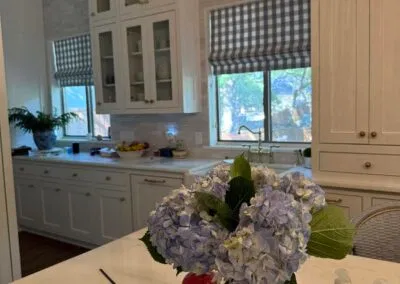
In North Texas, a beautiful window can also bring intense afternoon glare, extra warmth, and sunlight that gradually fades upholstery, flooring, and artwork. The right shade can make the room more comfortable while giving it a more finished, personal feeling.
So, which should you choose: Roman shades or roller shades?
The answer depends on what matters most at your window. A solar-screen roller shade is often a practical choice when you want to manage glare while preserving some view. A lined Roman shade offers a softer, more tailored look and can provide more substantial coverage. But the shade’s fabric, lining, fit, and use are just as important as its style.
First, What’s the Difference?
A Roman shade is made from fabric that folds into horizontal pleats as it rises. Its folds bring texture and softness to the window, and its fabric can introduce color, pattern, or a quiet layer of warmth.
A roller shade uses a continuous panel of fabric that winds around a tube at the top of the window. When raised, it creates a clean, simple profile. Roller shades are available in a range of materials, including translucent fabrics, room-darkening fabrics, and solar screens.

For Strong Sun and Glare: Consider a Solar Roller
A solar-screen roller shade is designed to filter incoming light. Its screen-like fabric can soften glare while retaining a view outside, which makes it worth considering for a bright living room, home office, or sunroom.
Screen fabrics are described by their openness factor. A measure of how open the weave is. A more open fabric typically allows more light and visibility through; a tighter weave generally offers more screening. The exact result depends on the material, so ask to review the fabric’s performance information rather than choosing by appearance alone.
This can be especially helpful on west-facing windows, where low afternoon sun may fall directly across a room. If your priority is to reduce glare on screens while keeping the space connected to the outdoors, a solar roller may be a strong fit.
One important distinction: not every roller shade is a solar shade. A solid roller in a room-darkening fabric offers a different experience from a light-filtering screen. The fabric selection determines much of the result.
For Softness and a Layered Look: Consider a Roman
Roman shades bring the warmth of fabric to the window. They can be made in a range of styles, from crisp, flat folds to softer constructions, and can be tailored to complement the architecture and furnishings already in your room.
That flexibility is one reason they suit spaces where the window treatment should be a visible part of the design, not simply a discreet way to filter light. A carefully selected pattern can add personality; a textured neutral can bring depth without competing with the rest of the room.
Roman shades can also be made with light-filtering or room-darkening lining. A lined or layered construction may provide more coverage than an unlined decorative shade, though the outcome depends on the fabric, lining, fit, and how fully the treatment covers the window. Roman shades stack into folds when raised, so they occupy more space at the top of the window than most rollers.

A Practical Comparison
| What you’re considering | Roman shades | Roller shades |
|---|---|---|
| Appearance | Soft, tailored folds; a natural place for pattern and texture | Clean, streamlined panel; can recede visually when raised |
| View when lowered | Depends on fabric and opacity | Solar-screen options can preserve a partial view |
| Glare control | Depends on fabric and lining | Solar-screen fabrics offer a useful range of light filtering |
| Privacy and darkness | A suitable lining can provide room-darkening coverage | Available in light-filtering, room-darkening, and blackout options |
| Insulation potential | Multiple fabric layers or lining may add coverage | A basic roller is typically a simple single fabric layer |
| Raised position | Fabric folds stack at the top | Fabric rolls around the tube for a compact profile |
These are general differences, not guarantees about every product. Construction and installation details matter. Consumer Reports notes that shades need to be used consistently to help manage heat, and that layered Roman shades and quilted roller shades can offer insulation benefits. Its guide to window coverings and summer heat is a helpful overview.
Which Shade Suits Your Room?
West-facing living room
If late-afternoon glare is the main frustration and you want to keep some view, start by looking at solar-screen roller fabrics. If the room needs a softer finish, you might layer a shade with drapery, or consider a Roman shade with a suitable lining.
Bedroom
Privacy and darkness may be more important than view-through. Either style can work with the right opacity and lining. Consider how much light enters at the sides and top, too: the fit and mounting position influence the result.
Kitchen or breakfast area
A roller shade can keep the look simple around cabinetry and counters. A Roman can add fabric and pattern to a room that might otherwise feel hard-surfaced. In either case, think about how the shade will operate alongside handles, faucets, and nearby furnishings.
Room with a strong design point of view
If you want the shade itself to contribute to the room’s character, a custom Roman can bring in a distinctive fabric or considered texture. If you’d rather keep the window quiet, a roller shade may provide a more restrained line.

What Matters More Than the Shade Style
Before choosing, consider the direction of the window, the time of day the sun reaches it, and what you want to preserve: a view, natural brightness, privacy, or a sense of calm. Then look at the shade’s fabric, lining, mounting, and operation.
For solar-screen fabrics, ask about openness and the product’s available performance specifications. For Roman shades, discuss the fabric’s weight and how lining affects the folds, stack, and finished appearance. A precise fit matters for either style, particularly when you are treating several windows together.
A shade can help manage sunlight, but it is not a substitute for evaluating the window itself or the room’s overall comfort. AERC’s overview of window-attachment ratings explains measures used to compare products, including solar heat gain. Where performance information is available for the shade you’re considering, it can help make the decision more specific to your home.
If convenient operation matters, especially for tall or hard-to-reach windows, motorization may also be worth considering. We discuss those options in our guide to motorized and battery-operated shades.
Roman or Roller? Start with the Feeling You Want
Choose a solar-screen roller when your priority is a streamlined look, filtered glare, and a degree of view-through. Choose a Roman shade when you want fabric, softness, and a more tailored decorative presence. If darkness or privacy is the priority, compare the lining and opacity options in both styles.
There isn’t one shade that suits every Texas window. In our custom shades gallery, you can explore Roman shades, woven textures, and other tailored treatments. We’ll help you consider how a fabric hangs, how it responds to light, and how it supports the room’s design.
Your Trusted Fabrication Partner
At Serendipity Designs, every project begins with a specialized technical consultation. We listen closely, assess the window, and refine the details with care, so your chosen treatment feels at home in the room and works beautifully for the way you live.
For tailored guidance in Dallas, Richardson, Plano, or Frisco, contact us to arrange a consultation.