
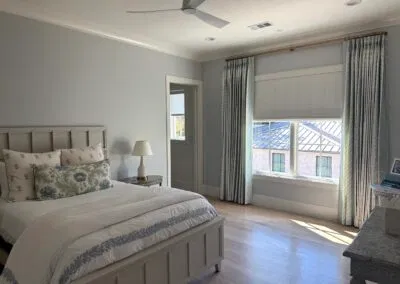
A window does not need to be perfectly centered, perfectly proportioned, or newly installed to become one of the most beautiful features in your room.
Sometimes the architecture is a little awkward. A window may sit close to a corner, stop short of the ceiling, or have trim that feels dated beside the rest of the space. Large windows can bring in more light than a room comfortably needs, while unusually shaped windows may seem difficult to dress at all.
I truly believe the answer is not always to disguise what is already there. The right window treatment can respect the existing architecture, soften its harder lines, and give the room a more intentional feeling.
The goal is not simply to cover the window. It is to complete the room.
With thoughtful placement, appropriate fullness, carefully selected pleats, and the right combination of shade and drapery, your existing windows can become an elegant part of the overall design.
Begin with the Architecture
Before selecting fabric or hardware, look closely at the room as it exists today.
Notice the ceiling height, the width of the wall around the window, the depth of the trim, the location of nearby furniture, and the direction of the natural light. Take note of doors, vents, artwork, built-ins, and any other details that affect how a treatment needs to operate.
This is particularly important with older homes, unusual window groupings, two-story spaces, and windows that are not centered on the wall. A treatment that works beautifully in one room may feel crowded or unbalanced in another.
A specialized consultation begins with the actual window rather than a standard formula. At Serendipity Designs, we consider the proportions of the architecture, the behavior of the fabric, the intended use of the room, and the degree of privacy or light control you need.
That careful beginning creates a more informed design direction.
Mount Higher to Emphasize Height
One of the simplest ways to make an existing window feel more graceful is to mount the drapery above the top of the frame.
A rod or track placed several inches above the trim can draw the eye upward. In rooms with taller ceilings, the treatment may extend even higher: sometimes closer to the ceiling line: to emphasize the full vertical scale of the space.
This approach is especially useful when the window itself feels short compared with the room. Rather than allowing the top of the glass to determine the visual height, the drapery establishes a longer, more elegant line.
Floor-to-ceiling panels can also bring continuity to a room with several different window heights. In a tall living area, for example, drapery may connect lower windows with arched or transom windows above, allowing the grouping to read as one architectural composition.

The exact mounting point depends on the ceiling, trim, hardware, fabric weight, and how the panels need to open. The important principle is simple: look beyond the glass and consider the entire wall.
Mount Wider to Give the Window Room
Width matters just as much as height.
When drapery hardware extends beyond the window frame, the panels can stack more fully on the wall instead of covering the glass when open. This allows more natural light into the room and gives the window a broader, more finished presence.
A wider mount is also helpful when a window feels too narrow for the wall around it. Extending the treatment beyond the trim can create a more balanced relationship between the window, furniture, and surrounding architecture.
In some rooms, the available wall space will limit how far the hardware can extend. A corner, doorway, cabinet, or adjacent window may require a more carefully scaled solution. That is where precise measuring becomes essential.
We evaluate the usable wall space, the stackback of the fabric, and the way the treatment needs to move before determining the final width. Every inch affects how the drapery hangs and how much of the window remains visible.
Fullness Gives Drapery Its Shape
A panel that is too narrow can look flat and unfinished, even when the fabric itself is beautiful. Fullness gives drapery its folds, movement, and visual substance.
Custom drapery is generally made with more fabric than the width of the window or rod it covers. The amount depends on the fabric, pleat style, room, and desired mood.
A lighter fabric may need additional fullness to create a soft, graceful hang. A heavier textile may require a more measured amount so the folds remain controlled rather than bulky. Decorative panels may use fullness primarily for appearance, while operable panels need to account for how the fabric moves across the hardware.
This is one of the places where fabric physics matters. Linen, velvet, silk, cotton, and performance textiles each behave differently. Some relax with time. Some hold a crisp fold. Others need interlining or additional structure to hang properly.
We consider how the material will move, stack, and settle: not just how it looks on a sample.
Choose Pleats That Suit the Room
The top of the drapery establishes much of its character. Pleats determine how the fabric leaves the hardware and how the folds continue down the panel.
A few popular styles include:
- Pinch pleats: Structured and classic, with a tailored appearance that suits traditional and formal rooms.
- Tailored pleats: Clean and composed, offering a transitional look that feels polished without being overly formal.
- Euro pleats: Softer at the top, with an elegant shape that can bridge traditional and contemporary interiors.
- Ripplefold: Smooth, continuous waves that create a relaxed and architectural effect.
- Box pleats: Broad, orderly folds that bring a strong sense of structure to a room.

Pleat style should relate to more than personal preference. It should also suit the scale of the room, the furniture, the hardware, and the way the treatment operates.
A large room with tall windows can support a more substantial header. A smaller room may benefit from a quieter pleat that keeps the treatment visually light. The goal is harmony rather than choosing the most decorative option available.
You can explore more examples of tailored headers and custom panels in our custom drapery gallery.
Layer a Shade Beneath the Drapery
Layering is one of the most flexible ways to work with existing windows.
A shade beneath drapery can provide everyday privacy and light control while the outer panels add softness, texture, and architectural emphasis. This combination is especially useful when you want the window treatment to perform well throughout the day without sacrificing a finished appearance.
Depending on the room, the underlying shade might be a Roman shade, roller shade, woven shade, or another tailored option. An inside-mounted shade can follow the proportions of the window itself, while the outside-mounted drapery can extend higher and wider to frame the surrounding wall.
This creates two distinct layers:
- The shade manages privacy, glare, and daily light.
- The drapery adds warmth, scale, and decorative presence.
Layering can also help awkward windows feel more intentional. A shade provides a clean, functional foundation, while the drapery creates a stronger visual frame around the complete opening.
Our custom shades can be designed with different levels of light filtering, privacy, and operation, depending on the room and exposure.
Consider the Texas Sun
In Dallas and throughout North Texas, strong sunlight deserves careful consideration.
West-facing windows may receive intense afternoon light. Large expanses of glass can create glare, warmth, and gradual fading on floors, upholstery, artwork, and decorative fabrics. Bedrooms and media rooms may call for more substantial light control, while living spaces often benefit from a softer filtered glow.
Lining helps shape the way a drapery panel performs. Light-colored lining can provide a clean appearance from the outside and help protect the face fabric. Room-darkening or blackout lining may be appropriate where glare and brightness need to be significantly reduced. Interlining adds body, fullness, and a more substantial hang, particularly for lighter fabrics.
The best choice depends on the orientation of the window, the room’s purpose, the fabric, and the level of light you enjoy. There is no single lining that suits every application.
We look at the whole environment before recommending the combination of fabric, lining, shade, and hardware.
A Consultation Begins with the Actual Window
Measurements taken from a distance are not enough for a truly custom treatment.
A specialized consultation evaluates the window as part of the room. We look at the trim, ceiling, wall space, floor, nearby furnishings, hardware placement, and any details that may affect installation or operation.
We also consider the less visible aspects of the project: how a fabric’s weight changes its hang, how much space the folds need when open, where a shade will sit inside the frame, and how lining changes the body of the finished panel.
That technical planning protects the design direction. Your existing architecture remains the starting point, while the treatment is developed to support the room around it.
Your windows already have a story. The right treatment gives that story a more finished line.
Whether you are updating one dated window, refining a bedroom, or addressing a dramatic two-story opening, custom work can make use of what is already there. Through carefully considered custom window treatments Dallas homeowners can bring balance, privacy, softness, and a more elevated feeling to their rooms.
For tailored guidance, visit our contact page to learn more about a specialized consultation. Serendipity Designs also creates custom drapery in Dallas with close attention to proportion, material behavior, and exceptional craftsmanship.