
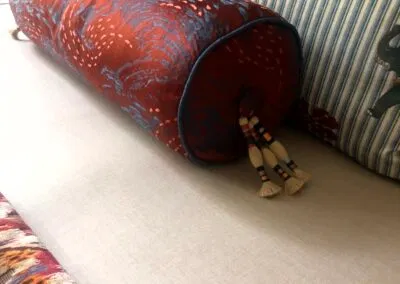
A room does not always need something new. Sometimes, the most meaningful refresh begins with fabric you already own.
An old pair of drapery panels may still have a beautiful pattern hidden in its folds. A favorite garment may carry the memory of a special season. An heirloom textile may be too delicate for everyday use but too important to keep tucked away. Even a small piece of leftover yardage can become an accent that brings color, texture, and personality into your space.
Repurposing fabric keeps what you love in your daily life.
At Serendipity Designs, I truly believe beautiful interiors should feel personal. When a textile has meaning, transforming it into a pillow or cushion can give that material a new role without losing the character that made you love it in the first place.
Begin with the Story in the Fabric
Before considering dimensions or trim, take a moment to look closely at the textile itself.
What do you love about it? Is it the pattern, the hand, the color, the age, or the memory attached to it? Understanding the most important quality helps guide the design. A dramatic botanical print may deserve to be the center of a square pillow. A delicate embroidered textile may be better used as a decorative panel on a sturdier cushion. A striped drapery fabric may look especially refined on a long lumbar pillow where its direction can be displayed clearly.
The finished piece does not need to use every inch of the original fabric. In fact, restraint is often part of the beauty. A thoughtfully selected section can preserve the most expressive part of the textile while allowing it to become something useful and beautifully finished.
A single pillow on a reading chair, a pair of cushions on a settee, or a tailored bench cushion in an entryway can bring the fabric back into view without overwhelming the room.

Is the Fabric Suitable?
The condition of the textile is the first practical consideration.
Look for:
- Sun fading, particularly along folds or exposed edges
- Stains, discoloration, or water marks
- Brittle areas that crack when handled
- Fraying, pulled threads, or weakened seams
- Stretching or distortion from previous use
- Areas affected by pets, storage, or moisture
Drapery fabrics are often excellent candidates for pillows because many are made with enough body to hold a tailored shape. Cotton, linen, velvet, twill, and other medium- to heavy-weight textiles may work well depending on their condition and construction.
Very thin or loosely woven fabrics may need support. A backing or lining can add stability, protect the original material, and help the finished pillow maintain its shape. A heavy or stiff textile may require a different cushion size or construction approach so it feels comfortable rather than rigid.
Heirloom fabrics deserve especially careful consideration. Older textiles, lace, silk, needlework, and handwoven materials may not be strong enough to serve as the entire outer shell of a cushion. In those cases, the fabric can sometimes be mounted onto a durable base, allowing the meaningful textile to remain visible while reducing the stress placed on its fibers.
The goal is not simply to use the fabric. The goal is to use it thoughtfully.
Let the Pattern Guide the Shape
Pattern scale has a significant effect on the finished result.
Large motifs often need room to breathe. A generous square, rectangular pillow, or bolster can display a floral, medallion, or scenic design more gracefully than a small cushion that cuts the motif into fragments. Smaller patterns, woven textures, and allover prints tend to offer more flexibility.
Directional patterns require another layer of planning. Stripes should remain straight. Geometric designs need careful alignment. A pattern with a clear top and bottom should be positioned upright. Even an apparently simple repeat may need to be matched across seams so the finished piece feels composed rather than accidental.
When there is enough fabric for more than one pillow, consistency becomes important. You may want each front to feature the same part of the pattern, or you may prefer a more relaxed arrangement in which every pillow reveals a different detail. Both approaches can be beautiful, but the decision should be made before cutting.
This is where a professional workroom adds value. We consider the scale of the pattern, the available yardage, the dimensions of the insert, and the way the finished pillow will be used. Careful planning helps protect the most important parts of the textile and reduces unnecessary waste.
Curtains with a Second Life
Old curtains often contain more usable fabric than you might expect.
A pair of panels may become:
- Two matching square pillows
- A long lumbar pillow and a smaller accent
- Cushions for a window seat or bench
- A bolster with contrast piping
- A decorative front paired with a solid back
- Coordinating accents for a bedroom or sitting room
The original heading, hem, or lining may not be suitable for the new design, but the central field of the panel may still hold considerable beauty. In some cases, the fabric can be turned or rotated to create the right visual effect. In others, the most successful approach is to feature one section on the front and use a complementary material on the reverse.
A professional workroom looks beyond the obvious rectangle. We assess the grain, the repeat, the construction, and the available usable area before determining the best layout.
That attention matters particularly when the fabric is limited. A thoughtful cutting plan can make the difference between a pillow that feels improvised and one that feels intentional.
From Favorite Garment to Meaningful Accent
A favorite garment can also become part of your home.
Perhaps it is a beautifully patterned jacket, a silk scarf, a ceremonial textile, or a piece of clothing associated with someone you love. The material may no longer suit its original purpose, yet the design or emotional significance remains.
Garments often require a different approach than drapery. They may contain seams, darts, buttons, embroidery, pockets, or shaped sections that need to be considered as part of the design. Those details can become focal points rather than obstacles.
A button placket might appear on the back of a pillow. Embroidery may be centered on the front. A small pocket or decorative trim may be preserved as a quiet detail. The final piece should honor the original construction while allowing the textile to function in a new setting.
I like to think of this kind of work as a continuation rather than a replacement. The fabric is not being stripped of its history. It is being given another way to be seen and appreciated.
Heirloom Fabric and Everyday Use
Heirloom textiles are often most beautiful when they are allowed to be part of life: not simply stored away.
That does not mean every delicate piece should become a seat cushion. A fragile textile exposed to constant friction, weight, or sunlight may require a more protective application. Decorative pillows, wall accents, or lightly used cushions may be more appropriate depending on the condition of the material.
For a stronger everyday cushion, a durable base fabric can support the heirloom piece. The meaningful textile may be framed on the front, used as an inset, or incorporated as a central panel. This approach allows the original material to remain visible while the surrounding construction provides structure.
For seating, proportion and performance are especially important. A bench cushion must suit the depth of the bench, the density of the insert, the amount of use, and the way the fabric behaves under pressure. A beautiful textile still needs the right construction to look polished in its new role.

The Details That Make It Feel Custom
The finishing details bring the transformation together.
Depending on the textile and the room, a pillow or cushion may include:
- Knife-edge construction for a clean, modern profile
- Welting or piping to frame the fabric
- A flange for a softer, more decorative edge
- A zipper or tailored closure for practical care
- A coordinating reverse side
- Down or alternative inserts selected for the desired shape
- Pattern matching across multiple pieces
- Decorative trim, fringe, or buttons
Trim should support the fabric rather than compete with it. A narrow welt can sharpen a botanical print. A contrasting edge may give a plain textile more definition. A decorative fringe can complement a traditional pattern, while a simple knife edge may be the right choice for an heirloom with intricate surface detail.

The right insert also changes the character of the finished piece. A fuller insert creates a relaxed, welcoming look. A firmer insert offers more structure. The choice depends on whether the pillow is intended for display, lounging, seating, or layered styling.
A Precise Plan for Personal Materials
Repurposing meaningful fabric is both creative and technical. The emotional value may be what brings the project to life, but precision is what helps the finished piece feel refined.
At Serendipity Designs, we bring careful attention to cutting, pattern placement, fabric behavior, and finishing. Our specialty soft works include the custom details that help pillows and cushions feel integrated into a room. For larger seating pieces, our furniture upholstery services offer another way to preserve what is already there while giving it a more tailored presence.
For homeowners looking for custom cushions Dallas, a specialized technical consultation is the natural starting point. It provides an opportunity to consider the fabric’s condition, the intended use, the measurements, and the overall feeling you want the finished piece to bring into your home. You can also explore our design gallery for examples of pattern, texture, and custom soft furnishing details.
Your most meaningful fabrics deserve thoughtful design.
Whether the material comes from a former set of curtains, a treasured garment, an heirloom collection, or a remnant already in your home, repurposing can make a room feel more personal without starting over. The finished pillow or cushion becomes useful again: visible, touchable, and connected to the life of the home.
Explore our specialty soft works or contact Serendipity Designs to begin considering what your favorite fabric might become next.