
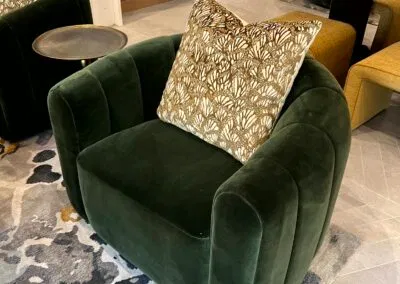
There is something deeply satisfying about giving a well-made piece of furniture another chapter.
A chair with a graceful silhouette, a table with beautiful proportions, or a sofa that still feels comfortable may not need to be replaced. It may simply need to be looked at again: with a discerning eye, thoughtful fabric, and careful craftsmanship.
I truly believe a home feels more personal when it includes pieces with substance and history. Before you begin searching for something new, take a closer look at what is already there. The furniture you own may have more potential than its tired upholstery, dated finish, or worn details suggest.
Here are five pieces worth keeping: and ways to help them feel fresh again.
1. The Comfortable Armchair
An armchair often becomes one of the most useful pieces in a room. It may sit beside a window, anchor a reading corner, or provide the extra seat that makes a living area feel complete.
If the proportions feel right and the chair remains comfortable, it may be an excellent candidate for renewal.
Look closely at the frame. Are the arms stable? Do the legs feel secure? Does the back have a pleasing angle? A chair with good bones can take on an entirely different personality through custom upholstery.

What reupholstery can change
Reupholstery can refine the way a chair looks, feels, and relates to the rest of your room. Depending on the piece, the process may include:
- Replacing worn fabric with a textile suited to the chair’s shape and use
- Refreshing the seat, back, or arm padding
- Reworking piping, trim, or decorative details
- Preserving exposed wood while cleaning or refinishing it
- Introducing a pattern, texture, or quiet solid that gives the piece new character
The fabric must work with the chair: not fight its proportions. A heavily carved frame may benefit from a textile that allows its details to remain visible. A simpler silhouette may invite something more expressive.
At Serendipity Designs, we consider how materials behave on the furniture. Fabric has to move around curves, settle across edges, and maintain a tailored appearance through use. That understanding is central to our approach to furniture upholstery.
2. The Well-Made Sofa
A sofa is a significant presence in a room, both visually and practically. If yours still has a comfortable depth, supportive structure, and proportions that suit your space, it may be worth preserving.
Begin with the sit test. Does the sofa still support the way you live? Is the seat height comfortable? Does the frame feel stable? Are the cushions tired, or is the entire piece fundamentally unsuitable?
When the structure and proportions are right, new upholstery can make a meaningful difference.
Look beyond the fabric
A sofa’s appearance depends on much more than its outer textile. The cushion fill, deck, springs, padding, welt, seams, and overall tension all contribute to the finished impression.
We look at these elements together. A fabric may be beautiful on a sample board but behave differently once it is applied to a deep seat or curved arm. Pattern scale, repeat, durability, and hand all matter.
A reupholstered sofa may also receive:
- Updated cushion interiors
- New batting or padding where the profile has softened
- Refined welt or decorative trim
- Adjustments to seams and proportions
- A textile that connects it with existing draperies, pillows, or accent pieces
The goal is not to disguise the sofa’s identity. It is to reveal what was already working and give it a more considered place in your home.
3. Dining Chairs with Good Bones
Dining chairs are often overlooked because they are smaller than other upholstered furnishings. Yet a set of well-made chairs can bring remarkable structure and warmth to a dining room.
Solid frames, balanced scale, and comfortable seats are all strong reasons to consider updating rather than replacing them. If the chairs feel sturdy when you sit and shift your weight, they may simply need new padding and upholstery.
A small change with a composed effect
Dining chair seats can be reupholstered in a fabric that complements the table, window treatments, rug, or surrounding architecture. You might choose a restrained texture for a quiet, tailored feeling or introduce a pattern through the seat fabric for a more collected look.
For a coordinated set, precision becomes especially important. Pattern placement should be considered from chair to chair. Edges should feel even. The finished upholstery should follow the shape of each seat cleanly.
We also pay attention to the details beneath the surface. Worn foam, compressed batting, loose joints, and outdated dust covers can all affect how a chair feels and looks. Refreshing these elements helps the finished piece feel intentional rather than simply covered in new fabric.
4. The Classic Table or Case Piece
Not every piece worth saving is upholstered.
A solid dining table, sideboard, dresser, or occasional table may continue to serve your home beautifully even when its finish feels dated. Good proportions are difficult to replace. So are useful drawers, generous surfaces, and construction that has stood the test of time.
Look for details such as:
- A stable frame and well-balanced legs
- Drawers that are practical for your needs
- A surface with enough scale for the room
- Materials that show quality rather than disposability
- A silhouette that still feels compatible with your home
A fresh finish or updated hardware may be all the piece needs. In some settings, preserving signs of age is the more beautiful choice. A gentle restoration can retain the character of the wood while helping the piece feel more at home with your current furnishings.
You can also connect a classic case piece to the rest of the room through textiles. A custom runner, nearby upholstered chair, or carefully chosen accent pillow can make an older table or sideboard feel like part of a complete design rather than an item left behind.
5. The Sentimental or Heirloom Piece
Some furniture deserves consideration simply because it means something to you.
It may be a chair passed through your family, a small settee from an earlier home, or a piece with a shape you have always loved. Sentimental value is not a flaw to be reasoned away. It is part of what gives a room its soul.
The most successful update respects the original character while making the piece more suitable for the way you live now.

Preserve the details that matter
Before choosing a new textile, identify the qualities that make the piece special. It may be the curve of the back, the carving on the arms, the shape of the feet, or the way the wood has aged.
Then consider what can be refined:
- The upholstery color or pattern
- The cushion comfort
- The trim and welt
- The exposed wood finish
- The placement of the piece within the room
A contemporary fabric can make a traditional frame feel lighter. A timeless linen or textured textile can allow distinctive woodwork to remain the focus. A carefully selected pattern may bring out a detail that was easy to miss beneath an older covering.
The best result is not necessarily the most dramatic one. It is the one that allows the piece to remain recognizable while feeling more connected to your home today.
How to Know What Is Worth Keeping
When you are deciding whether to restore or replace a piece, begin with four questions:
Is the structure sound?
Look for loose joints, cracks, instability, or visible damage. A qualified assessment can help distinguish between a manageable repair and a more extensive structural concern.
Are the proportions right?
A beautiful piece still needs to suit the room. Consider its height, depth, scale, and visual weight alongside the furniture you already have.
Is it comfortable?
Good comfort is valuable. If the shape supports the way you sit, dine, read, or relax, that may be a strong reason to explore new padding and upholstery.
Does it have meaning or character?
Some pieces contribute history, craftsmanship, or personality that is difficult to find in a new purchase. That value deserves a place in the decision.
A More Personal Kind of Refresh
Refreshing existing furniture is not about refusing change. It is about making thoughtful choices.
A beloved chair may need a new fabric. A sofa may need updated cushion interiors. A dining set may need careful attention to pattern and finish. A sentimental piece may need only enough refinement to feel at home again.
My goal is simple: to help you see the possibilities in what you already own. We bring together technical knowledge, careful measurements, fabric expertise, and meticulous workmanship so that each piece is considered as an individual.
If you are exploring a furniture refresh in Dallas, view our furniture upholstery services or visit our design gallery for further inspiration.
Keep what is beautiful. Refine what is tired. Let your furniture tell a more finished story.